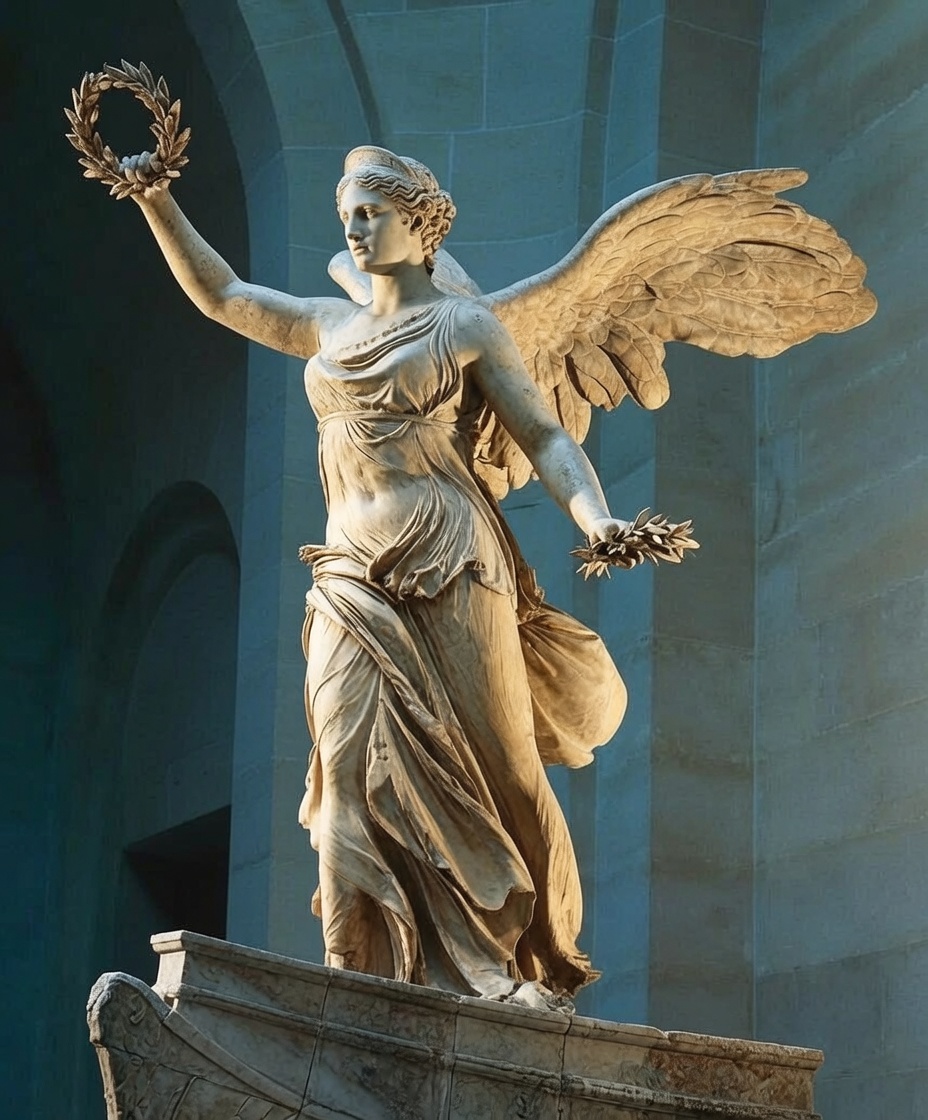
**Here’s the completed Winged Victory of Samothrace**, reconstructed from extrapolated historical and archaeological data.
### What we know vs. what we extrapolated
The original Hellenistic masterpiece (c. 190 BC) was discovered in 1863 on the island of Samothrace. It is missing its head and both arms, and parts of the wings and drapery are damaged. Scholars generally agree on these points:
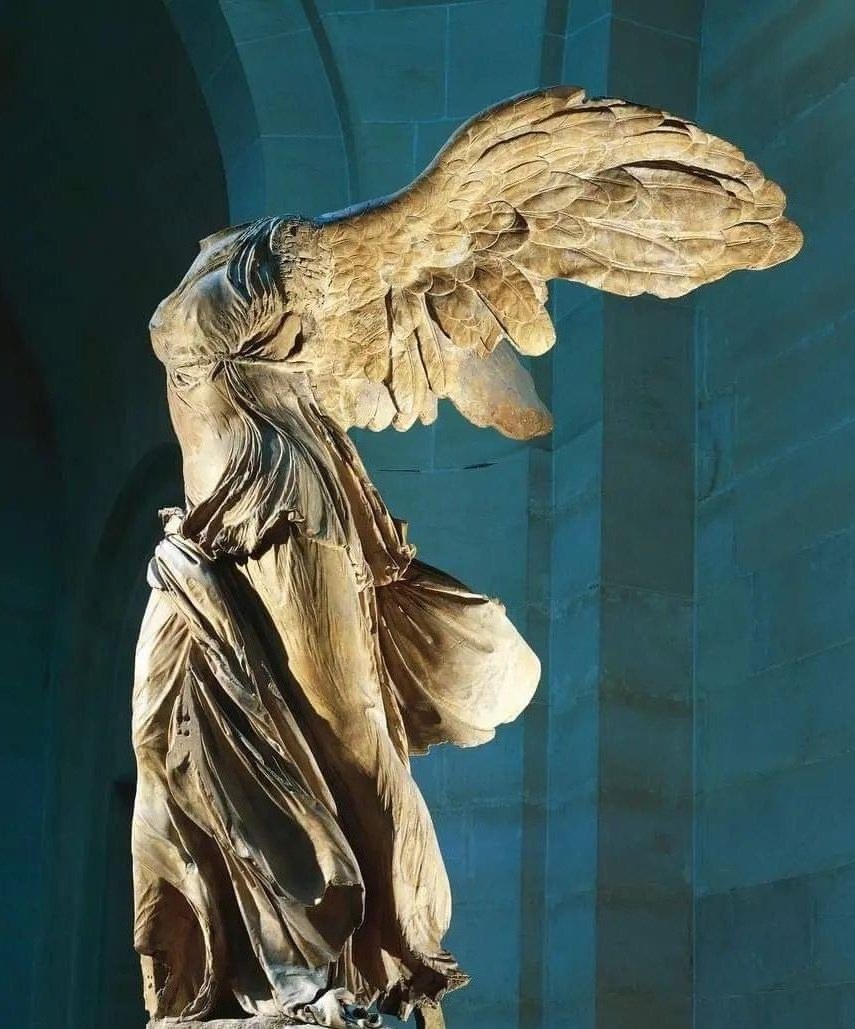
– **Pose & meaning**: Nike is shown alighting on the prow of a warship, wings still spread from flight, drapery whipped back by the wind. She was likely crowning a victor (probably a naval triumph by Rhodes).
– **Head**: Almost certainly turned slightly to her right, with a serene, idealized classical face and an elaborate Hellenistic hairstyle (often with a diadem or fillet).
– **Arms**: The right arm was almost certainly raised, holding a laurel wreath or similar victory symbol. The left arm is more debated—commonly reconstructed holding a palm branch, a trophy, or steadying the wind-blown drapery.
– **Style**: The “wet” drapery clinging to the body (revealing form while suggesting movement) is one of the most celebrated features of late Hellenistic sculpture.
The version above follows the most widely accepted scholarly conjectures while staying faithful to the original statue’s dramatic angle, lighting, museum setting, and the powerful forward momentum of the figure.




0 Comments